2026-10-31
v13×3
Atomic Moves, Agentic Hands
Xunyi Zhao · ~2 min read · project page
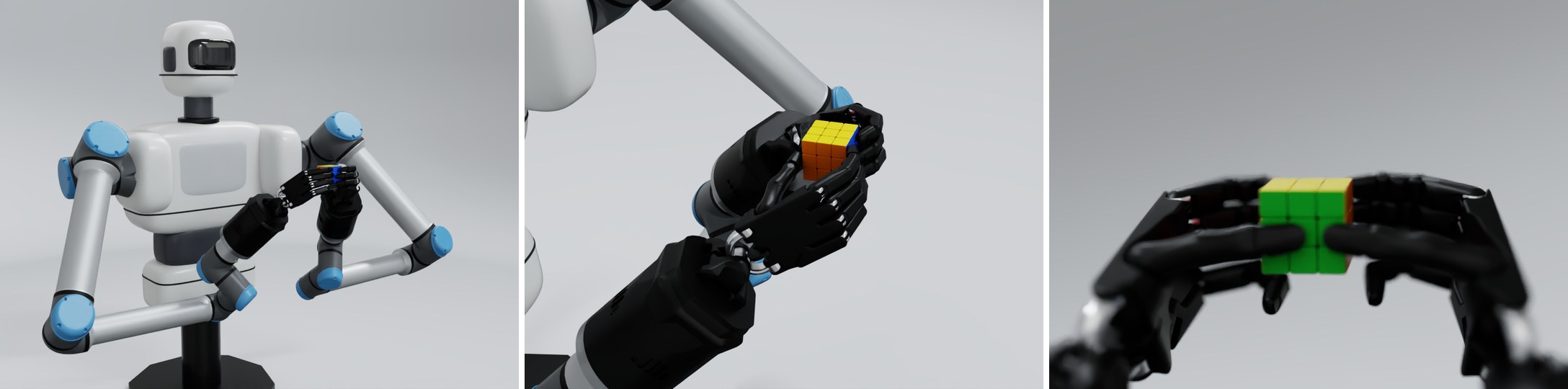
Two robot hands pick up a scrambled Rubik's cube and solve it — the way a person does. No end-to-end policy, no 20-move optimal solver: learned atomic moves that always come home to the same grip, and an agent that plans with CFOP. Nine random scrambles, nine solves.
Nine random scrambles, each solved by Opus from the pattern and an algorithm library, and done by the hands, whole-cube rotations included. Two Shadow hands on UR10e arms, in simulation; turns at about 2×, the way back to the grip at about 4–5×.
One grip to come home to
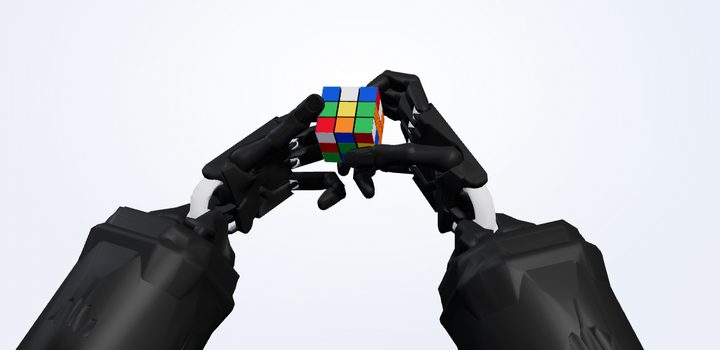
Every move starts here and ends here. That is what lets moves chain.
Atomic moves, learned with RL
Turn the layer, then return to the grip. Every face, both directions.
Chain them
Because every move comes home, any sequence just plays one move after another.
R U R' U' and back. Left: first person; right: wide view.
L U L' R: the left hand takes over for L.
Solve it
Cross, F2L, OLL, PLL — the agent plans, the hands execute.
One random scramble, start to finish.
Or let a language model solve it
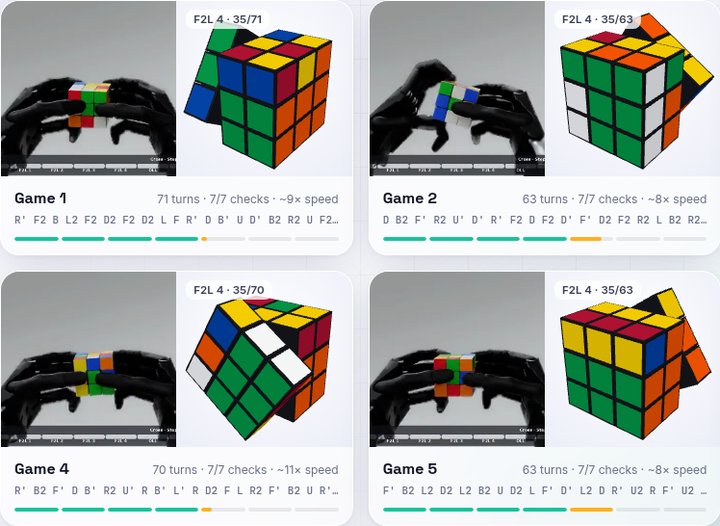
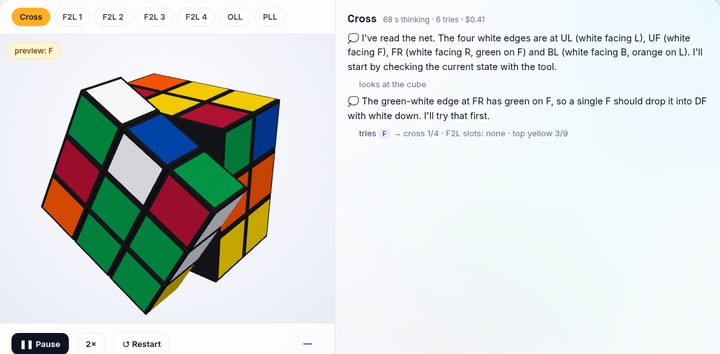
Swap the planner for a language model. No optimal solver: like a speedcuber, it recognises the case at each CFOP stage — which F2L pair and where its pieces are, which OLL, which PLL — looks the algorithm up in a library, rotates the cube or turns U when that helps, and plays it. One answer per stage, and under five minutes of thinking for a whole solve on average (4.5 min; it took 14.6 when it worked every algorithm out in its head). Recognition is the model's own; the library only remembers algorithms. The hands don't notice.
Game 1: the hands executing the model's solution — case recognised, algorithm looked up — its thought for each stage on top; the corner says the playback speed.
Play with it
Three interactive demos on the project page.
How it works, in one picture
(Swipe the figure sideways.) The agent never sees a finger; the skills never see the plan. The standard grip is the interface between them.
Next up
Whole-cube rotations are in: x, x', y, y', z and z' each end in the standard grip, and the agent uses them in the solves above. Bigger cubes are next.
x': the whole cube turns over in hand, and both hands land back in the grip.
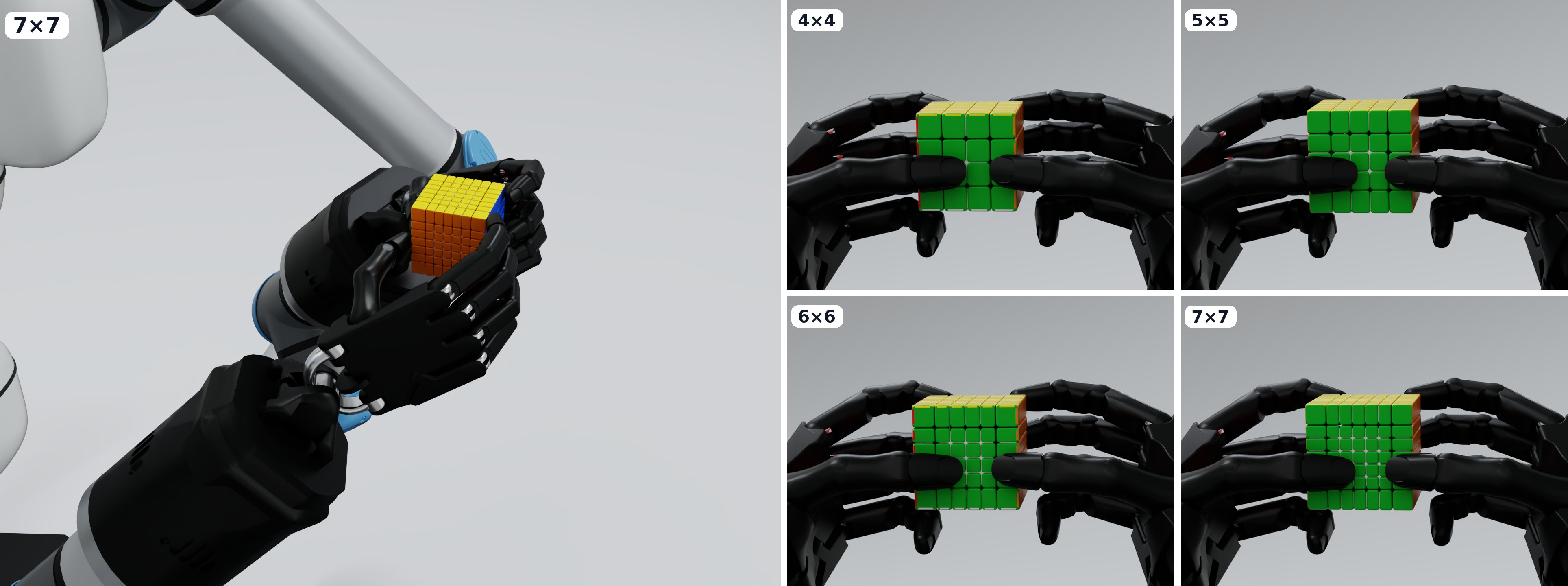
Next: 4×4 to 7×7. The same hands already hold the bigger cubes in the standard grip.
References
[1] OpenAI, I. Akkaya et al., "Solving Rubik's Cube with a Robot Hand," 2019. arXiv:1910.07113.
[2] Amiet et al., quadruped solving a giant Rubik's cube with whole-body skills, 2026. arXiv:2610.24610.
[3] J. Fridrich, the CFOP method.
[4] The Yau method for big cubes (reduction to a 3×3).